And exactly who should bother upgrading
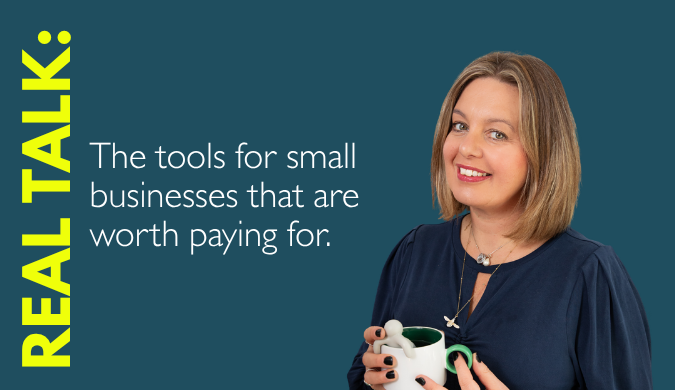
Last week I walked you through the best free tools for small businesses, because I know money is tight for a lot of people right now. This week I want to flip it, because there are some tools where the paid version genuinely changes the game. And if you’re in the right kind of business, the upgrade is absolutely worth it.
The key word is if. I’m not here to tell you to spend money you don’t have or don’t need to spend. I’ve made the wrong call on upgrades before, paying for things before I’d actually maxed out the free version, or upgrading something that didn’t move the needle for my particular business. So I want to give you an honest guide to what’s worth it and who it’s actually for.
Canva Pro
At around £90 a year, Canva Pro is one of the better value investments you can make in your business. And before you compare it to other subscriptions, consider this: Microsoft 365 costs a similar amount, and for most small business owners the free alternatives, Google Docs, Google Slides, Google Sheets, do exactly the same job. Canva Pro, on the other hand, gives you something you genuinely can’t replicate for free.
Here’s what you get that the free version doesn’t: the full premium template library, advanced brand kit features, background remover, Magic Resize to adapt content across platforms in seconds, a much bigger stock image and video library, and access to Affinity Designer depending on your plan, which is professional-grade vector design software that would have cost you a significant Adobe subscription not long ago.
The one caveat: if you’re primarily creating Reels using your own footage and images filmed on your phone, you might not feel the full benefit straight away, your content is already coming from you, not from templates. But even then, Canva Pro earns its place for everything else: presentations, carousels, media kits, proposals, social graphics, email headers, PDFs. The templates are genuinely fabulous and you simply get more of everything with the pro version.
For most small businesses creating a range of content across platforms, £90 a year works out at less than £8 a month. It’s one of the first upgrades I would recommend.
A good video editor – CapCut or Descript
Video is not going away. And if you’re producing Reels, TikToks, or any kind of video content regularly, doing it manually on your phone without proper editing tools is probably costing you time.
Both CapCut and Descript have solid free tiers, but the paid features are where the real time-savings kick in. We’re talking automatic captions (that are actually accurate), AI-powered noise removal, background removal, and in Descript’s case – the ability to edit video by editing the transcript. You literally delete words from a document and the video cuts itself. It sounds almost too good to be true and it isn’t.
Descript in particular is worth a look if you’re doing any kind of podcast, long-form video, or recorded content. It makes the editing process so much faster that it pays for itself quickly once you’re using video consistently.
Who should upgrade: anyone producing video more than once a week, podcasters, anyone whose current editing process takes longer than the recording itself.
Claude – worth it if you’re using AI daily
I’m going to be straight with you, I use Claude, not ChatGPT (I won’t get political here) I think it’s the better tool for the kind of work most small business owners actually need: writing, strategy, content planning, brainstorming, client personas, email drafts. It thinks more clearly, writes more naturally, and doesn’t sound like it’s been generated by a robot.
The free version is capable and worth trying first. But if you’re using AI regularly in your business the Pro version at around £15 a month gives you significantly more usage, access to the most powerful models, and faster responses when you’re in full flow. For the time it saves, it pays for itself quickly.
Start free. If you hit the ceiling within a couple of weeks, upgrade. You won’t regret it.
The honest truth about paid tools right now
I know a lot of small businesses are navigating real financial pressure at the moment. Rising costs, slower sales cycles, tighter margins – it’s genuinely difficult out there. The last thing I want is for this post to feel like a nudge to spend money you don’t have.
My actual advice is this: don’t upgrade anything until you’ve properly maxed out the free tier. Most free tools are more capable than people realise, and the upgrade only makes sense when you’ve genuinely grown into needing it.
When you do reach that point, the tools above are the ones I’d spend on first. They have the best return on time invested, and they’re genuinely used by real working businesses, not just recommended by people who get affiliate income from saying so.
One more thing – don’t overlook your equipment
We talk a lot about software, platforms, and subscriptions. But if there’s one area where a relatively small investment can make a disproportionate difference to your marketing, it’s your physical setup.
A decent tripod means your videos aren’t shaky. A ring light or a simple LED panel means you’re not filming yourself in the shadow of your own laptop. A clean, consistent background, even just a tidy corner of a room, means your content looks intentional rather than accidental.
You don’t need a full studio. But a tripod (around £15–30), a basic photo light (£10–25), and five minutes thinking about where you film can genuinely transform the quality of your reels and photos. And in a world where people are scrolling at speed, the quality of your image is often the thing that makes them stop.
Before you upgrade any software subscription, ask yourself: is my visual content being held back by my tools or my setup? For a lot of small business owners, it’s the setup.
Before you spend anything – do you know who you’re talking to?
The most expensive mistake in marketing isn’t the wrong tool. It’s marketing to the wrong person. Or not being clear enough on who the right person is.
If you want to make every pound you spend on your marketing work harder, start with your ideal client. I’ve built a free AI-powered tool to help you get that clarity in about ten minutes. Link below.
Next week – we’re talking about something a bit different. Because I’ll be taking some actual time off, and I want to make the case that rest isn’t laziness. It’s strategy.